A friend who runs a five-person remote design team called me last month, halfway through comparing monday.com alternatives. She’d loved its colorful boards when the team was small. Then a paid plan meant buying at least three seats, and the time tracking she needed sat on a higher tier.
Her story is common. Growing teams hit the same walls: seat minimums, everyday features locked behind pricier plans, and boards that need constant tidying.
So I’ve rounded up 12 alternatives to monday.com, starting with ProProfs Project, which my team uses to manage client projects, track hours, and send invoices in one place. Each entry covers who it suits, pricing, pros and cons, and the catch worth knowing before you switch.
Why Do Teams Look for monday.com Alternatives?
Most teams leave monday.com for one of four reasons: they pay for seats they don’t use, key features sit on higher plans, automations run out, or boards get harder to manage as the team grows. None of these is a dealbreaker on day one, but they add up as a team scales.
- Seat minimums: Every paid plan starts at 3 seats, so a two-person team pays for a third. That hurts more because software already goes underused: a study by Zylo in 2026 found the average organization uses only 54% of the licenses it pays for.
- Features held for higher plans: Gantt, timeline, and calendar views start on Standard. Time tracking and task dependencies need Pro, which costs $19 per seat per month, billed annually.
- Automation caps: Standard includes 250 automation actions a month. A busy team can use that up quickly, and the next step up is Pro.
- Board upkeep: Boards are flexible, but someone has to maintain the columns, statuses, and views. A setup that works for 5 people often gets cluttered at 15, especially when non-technical teammates have to find their own tasks.
If any of these sound familiar, the tools below handle them differently.
12 Best monday.com Alternatives
Each of these 12 tools fixes at least one of monday.com’s sore spots: price, features locked behind higher plans, or complexity. Here’s how these monday.com competitors compare on fit, starting price, and G2 rating.
| Tool | Best For | Pricing | G2 Rating |
| ProProfs Project | Simplest Project Management Tool for SMBs With Client Invoicing, Time & Billing | Free plan available. Paid plan starts at $39.97. | 4.4/5 |
| ClickUp | More Features per Dollar | Free plan available; paid from $7/user/month (billed annually) | 4.6/5 |
| Asana | Clear Task Ownership Across Teams | Free plan available; paid from $10.99/user/month (billed annually) | 4.4/5 |
| Wrike | Resource Management in Large Teams | Free plan available; paid from $10/user/month (billed annually) | 4.2/5 |
| Smartsheet | Spreadsheet-Style Project Tracking | Starts at $9/member/month (billed annually); no free plan for new sign-ups | 4.4/5 |
| Airtable | Database-Driven Workflows | Free plan available; paid from $20/seat/month (billed annually) | 4.6/5 |
| Trello | Simple Kanban Boards | Free plan available; paid from $5/user/month (billed annually) | 4.4/5 |
| Notion | Combining Docs and Projects | Free plan available; paid from $10/member/month (billed annually) | 4.6/5 |
| Teamwork.com | Agencies Managing Client Projects | Free plan available; paid from $9.99/user/month (billed annually, 3-user minimum) | 4.4/5 |
| Zoho Projects | Budget-Conscious Teams | Free plan available; paid from $4/user/month (billed annually) | 4.3/5 |
| Basecamp | Flat-Rate Remote Collaboration | Free plan available (1 project, up to 3 users); paid from $29/month flat for up to 5 users | 4.1/5 |
| Jira | Software Development Teams | Free for up to 10 users; paid from $7.91/user/month | 4.3/5 |
1. ProProfs Project – Simplest Project Management Tool for SMBs With Client Invoicing, Time & Billing
My team runs its client work in ProProfs Project, a cloud-based project management tool, from website rebuilds to monthly retainers. Among these monday.com alternatives, it’s one of the few with time tracking and invoicing on every plan.
That’s a gap many teams hit on monday.com, where time tracking needs the Pro plan. Here, time tracking logs billable and non-billable hours, invoicing turns them into client invoices, and clients follow progress through guest access. The Business plan is also a flat price for unlimited users, so new hires don’t change the bill.
Everyone keeps the view that suits them. Designers use a Kanban board, account managers use the calendar, and I watch the Gantt chart, where dependencies shift later dates when something slips. The portfolio view shows which client projects are on track. These are the things that make ProProfs Project the simplest project management tool for SMBs with client invoicing, time & billing.
Setup and reporting take less work, too. AI reports answer questions like “which projects are overrunning?” from live data on every plan, and on the Business plan, AI project creation builds a project’s tasks and stages from a short description. The available ProProfs Project features cover planning, task tracking, collaboration, time management, invoicing, and reporting within the same workspace.
Pros:
- Time tracking logs billable and non-billable hours per task, and invoicing turns them into client invoices on every plan, including Free.
- The Business plan charges a flat price for unlimited users, so the bill doesn’t grow with each new seat.
- List, Gantt, Kanban, and Calendar views are available on every plan, including Free.
- Task dependencies and baselines shift downstream dates when one task slips and show how far a project has drifted from its original plan.
- Guest access lets clients view or comment on projects, while roles and permissions control what each person can change.
Cons:
- No downloadable or on-premise version
- No dedicated account manager for the free plan, unlike paid plans
Pricing: Free plan available. Paid plans start at $39.97.
Xtencil, a freelance design and UI/UX studio, tested close to a dozen project management tools before choosing ProProfs Project for its features and value. Its clients can check project status without any training.
2. ClickUp – Best for More Features per Dollar
When my team was weighing a move off monday.com, ClickUp was the first tool I trialed, because it promised similar flexibility at a lower per-seat price. I rebuilt one client project in it, with a list for each deliverable, a board for the design team, and a doc for the brief.
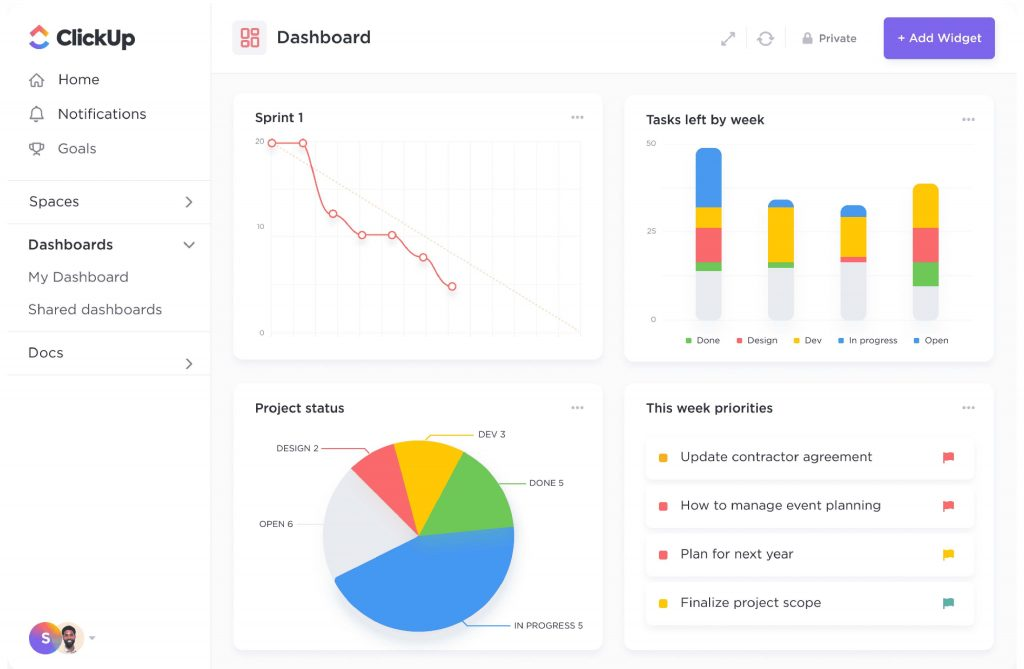
Value was what stood out. The free plan has no cap on members. The Unlimited plan, at $7 per user per month billed annually, adds Gantt charts, unlimited storage, and native time tracking, which monday.com keeps for its Pro plan. Docs and tasks also lived in the same workspace, so I didn’t need a separate wiki for project briefs.
That breadth came with a learning curve. ClickUp has so many settings and views that it took my team a while to agree on one structure. The AI features, sold as Brain, cost extra per user on top of the plan, and the free plan’s 60MB of storage ran out quickly once we started attaching files to tasks.
Pros:
- The free plan includes unlimited tasks and unlimited members, so a whole team can test it without paying.
- The Unlimited plan adds Gantt charts, unlimited storage, and native time tracking at $7 per user per month.
- Docs sit in the same workspace as tasks, so briefs and specs stay next to the work they describe.
- The Business plan adds 5,000 automations a month, timeline views, and unlimited dashboards.
Cons:
- Brain AI features cost extra per user on top of any plan.
- The Free plan caps storage at 60MB.
Pricing: Free plan available. Paid plans start at $7/user/month (billed annually).
3. Asana – Best for Clear Task Ownership Across Teams
A friend who runs operations at a marketing agency moved her team to Asana after their monday.com boards had grown into a maze of columns nobody owned. Each piece of work became a task with one assignee and one due date, so “who’s on this?” stopped being a daily question.
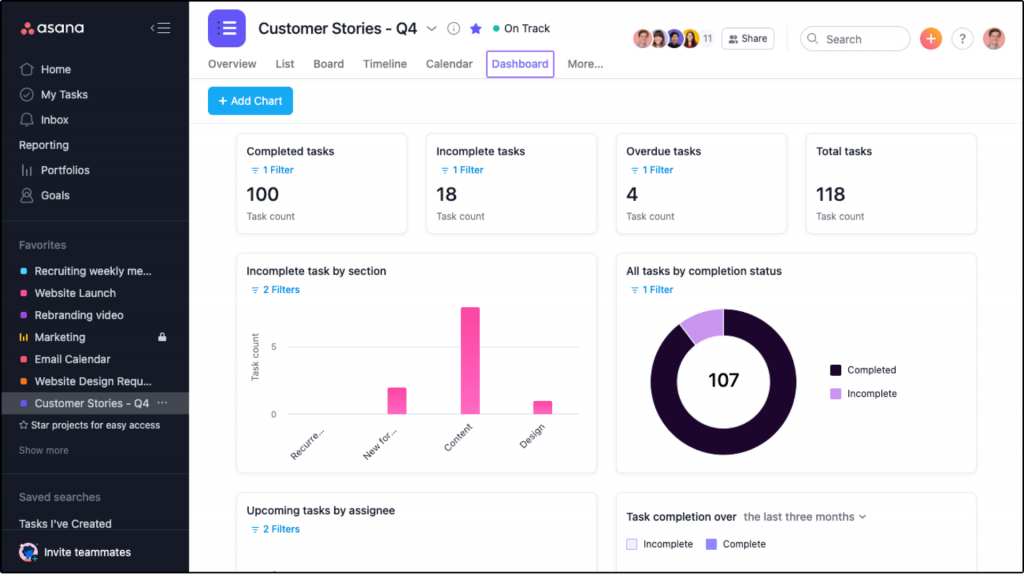
What she valued most was structure without heavy setup. The Starter plan, at $10.99 per user per month billed annually, added Timeline and Gantt views, custom fields, project dashboards, and a Workflow Builder that mapped how requests moved from intake to delivery. Her campaign launches stayed on one timeline, and she could see which tasks were waiting on someone else.
The limits showed up when her agency started billing by the hour. Native time tracking and workload management only start on the Advanced plan at $24.99 per user, so tracking hours meant either a big jump in price or a separate tool. Teams weighing other options can compare a few in this list of Asana alternatives.
Pros:
- Single-assignee tasks with due dates make ownership clear across departments.
- The Starter plan adds Timeline and Gantt views, custom fields, and dashboards.
- The Workflow Builder maps how work moves from request to delivery in one visual setup.
- Forms on Starter turn incoming requests into tasks automatically.
Cons:
- Native time tracking and workload management require the Advanced plan at $24.99 per user per month.
- Goals and portfolios aren’t included on Starter.
Pricing: Free plan available. Paid plans start at $10.99/user/month (billed annually).
Turn Every Tracked Hour Into a Client Invoice
4. Wrike – Best for Resource Management in Large Teams
Capacity was the problem a former colleague faced at a 60-person consultancy. Several project leads kept booking the same specialists, and monday.com’s boards didn’t show who was already overloaded, so the firm switched to Wrike.
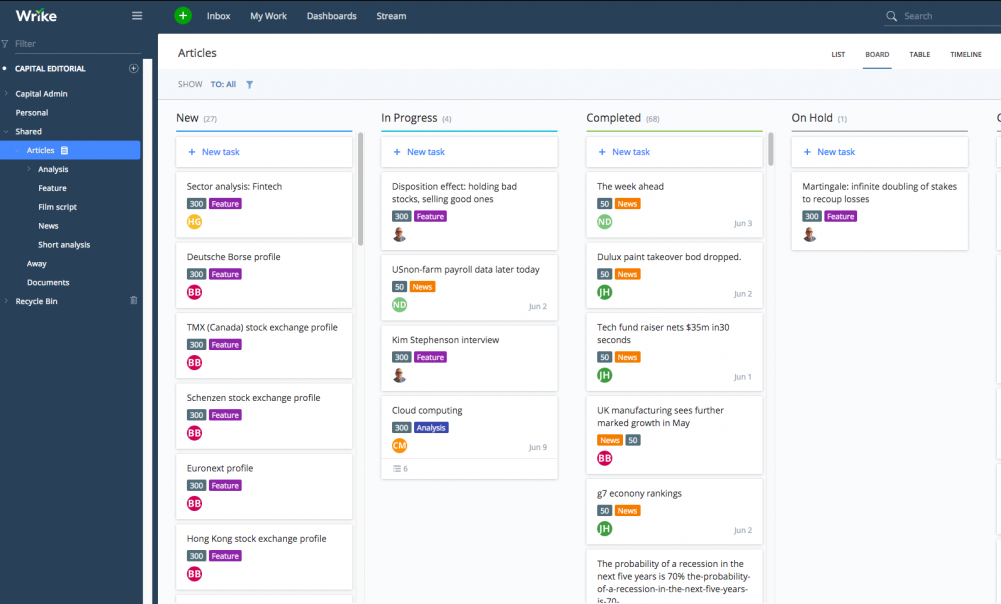
Its workload and resource views showed each person’s assignments across projects, which made overbooking visible before it caused missed deadlines. Interactive Gantt charts and custom workflows with approvals kept client deliverables moving through review without a separate proofing tool.
The firm needed the Business plan to get those benefits. The Team plan, at $10 per user per month billed annually, caps at 15 users and doesn’t include resource views or time tracking. Needing an upgrade for those features is why some teams look at Wrike alternatives instead. My colleague also said new hires needed a few weeks to get comfortable with the interface.
Pros:
- Workload and resource views show each person’s capacity across projects.
- Interactive Gantt charts, available from the Team plan, map dependencies and timelines.
- Custom workflows with approval steps fit client review cycles.
- File proofing lets reviewers mark up deliverables directly in the tool.
Cons:
- Resource views and time tracking start on the Business plan.
- The Team plan caps at 15 users.
Pricing: Free plan available. Paid plans start at $10/user/month (billed annually).
5. Smartsheet – Best for Spreadsheet-Style Project Tracking
A project manager friend who builds everything in Excel tried Smartsheet when her team outgrew shared spreadsheets and didn’t want the learning curve of Microsoft Project. The grid felt familiar on day one, but each row could carry an owner, a due date, attachments, and comments, which turned a static sheet into a working project plan.
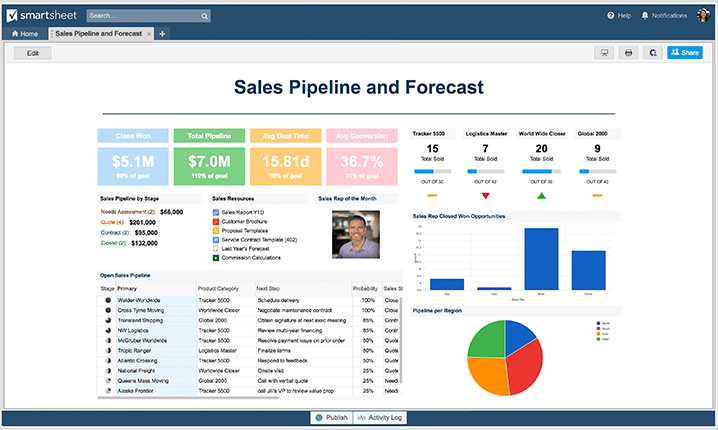
Her stakeholders didn’t need paid seats to follow along. The Pro plan, at $9 per member per month billed annually, includes unlimited free viewers, so executives and clients could check progress without adding to the bill. Dashboards and Gantt views turned the same rows into status reports she could share in a meeting.
Growth exposed the ceilings. Pro supports up to 10 members and 250 automations a month, while timeline view, workload tracking, and unlimited automations sit on the Business plan at $19 per member, which needs at least 3 members. Smartsheet also closed its free plan to new sign-ups, so new teams start on a 30-day trial instead.
Pros:
- The spreadsheet-style grid feels familiar to teams moving off Excel.
- Unlimited free viewers let stakeholders follow progress without paid seats.
- Dashboards and Gantt views turn the same data into shareable status reports.
- The Business plan adds unlimited automations, timeline view, and workload tracking.
Cons:
- The Pro plan is limited to 10 members and 250 automations a month.
- There’s no free plan for new sign-ups, only a 30-day trial.
Pricing: Starts at $9/member/month (billed annually).
6. Airtable – Best for Database-Driven Workflows
An agency owner I know switched to Airtable because his work wasn’t really a list of tasks. It was a web of linked records: clients, campaigns, assets, and approvals. Airtable let him connect those tables, so opening a client showed every campaign and asset tied to it.
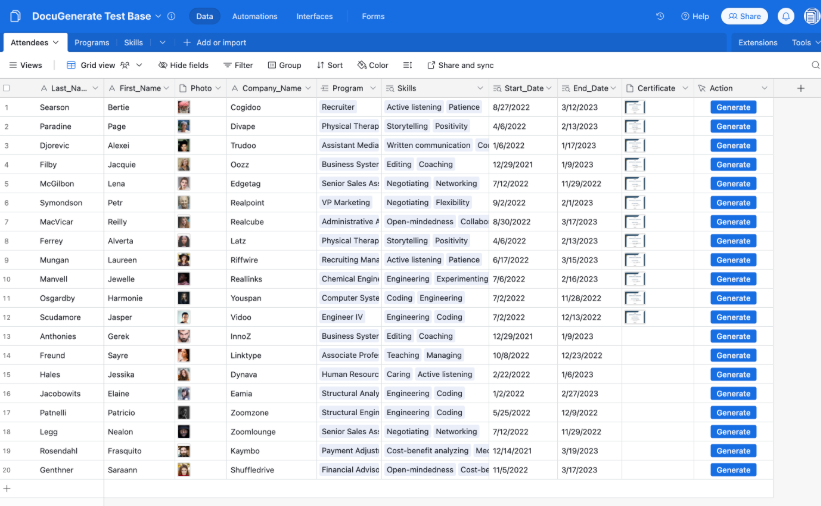
The flexibility was the draw. He built views on top of the same data, using a grid for his ops lead, a Kanban board for designers, and a calendar for publish dates. Automations moved records along as their status changed, and interfaces gave clients a cleaner screen than the raw tables.
The catch is per-editor pricing and data caps. The free plan allows 5 editors, 1,000 records per base, and 100 automation runs a month. The Team plan, at $20 per seat per month billed annually, raises those limits, but every person who edits data counts as a paid seat. He also found that Gantt and timeline views aren’t available on the free plan. If that’s a dealbreaker, here are some Airtable alternatives to consider.
Pros:
- Linked records connect clients, projects, and assets across tables.
- Multiple views, including grid, Kanban, and calendar, run on the same data.
- Automations update records and notify people when a status changes.
- Read-only collaborators are free on paid plans.
Cons:
- The free plan caps at 5 editors, 1,000 records per base, and 100 automation runs a month.
- Gantt and timeline views aren’t available on the free plan.
Pricing: Free plan available. Paid plans start at $20/seat/month (billed annually).
7. Trello – Best for Simple Kanban Boards
I ran a small internal content calendar on Trello for a few months, with one board, four lists, and a card for each piece of content. Setup took about ten minutes, and nobody needed training to drag a card from “Drafting” to “Published.”
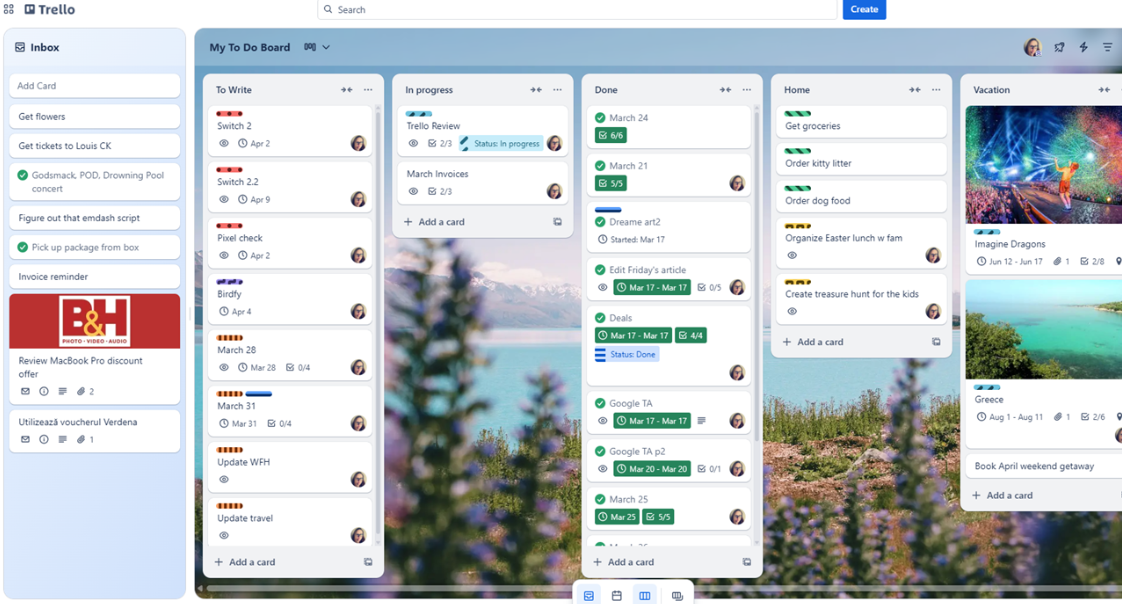
That simplicity is the whole appeal. The free plan covers up to 10 collaborators per workspace, and Butler automation was built in, so I set rules to move cards and assign reviewers without writing anything technical. For a team that only ever used monday.com’s board view, it covered most of the job.
It started to feel thin once I was managing multiple projects across several boards. The Standard plan, at $5 per user per month billed annually, removes the board and collaborator limits and adds custom fields, but it sticks to the board view. Timeline, calendar, and dashboard views only come with Premium at $10 per user. I compared a few options in this list of Trello alternatives.
Pros:
- Drag-and-drop Kanban boards are easy for anyone to learn.
- Butler automation is built into every plan, including Free.
- The free plan supports up to 10 collaborators per workspace.
- The Standard plan adds unlimited boards and custom fields for $5 per user.
Cons:
- The free plan is limited to 10 boards and 250 automation runs a month per workspace.
- Timeline, calendar, and dashboard views require the Premium plan.
Pricing: Free plan available. Paid plans start at $5/user/month (billed annually).
8. Notion – Best for Combining Docs and Projects
A startup founder in my network moved her product team from monday.com to Notion because the real work lived in documents. Specs, meeting notes, and research sat in one place, while the tasks were scattered across boards in another.
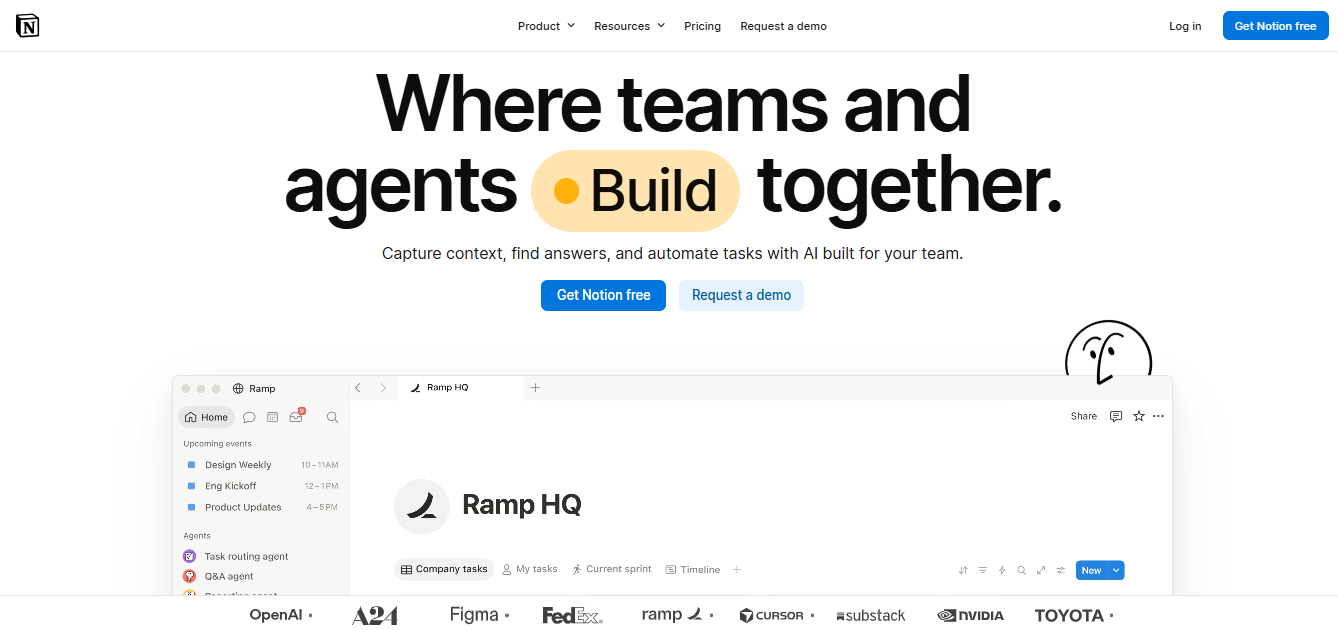
In Notion, every project became a database that sat right next to its docs. Her team used a board view for the sprint, a timeline view for the roadmap, and a calendar view for launches, all built on the same data. Linking a task to its spec meant nobody had to hunt for context before starting work.
The trade-off is that Notion is a workspace first and a project tool second. There’s no built-in time tracking, and her team spent a few weeks building templates before the setup felt stable. Full Notion AI features also require the Business plan at $20 per member per month, while Plus, at $10, only includes a limited AI trial.
Pros:
- Docs, wikis, and project databases live in one connected workspace.
- Board, timeline, and calendar views run on the same project data.
- Linked pages connect each task to its spec, notes, or brief.
- Guests can view or edit shared pages, so outside collaborators can work without full member access.
Cons:
- There’s no built-in time tracking.
- Full Notion AI features require the Business plan at $20 per member per month.
Pricing: Free plan available. Paid plans start at $10/member/month (billed annually).
See Every Project’s Tasks, Hours, and Invoices in One Place
9. Teamwork.com – Best for Agencies Managing Client Projects
Client work is what Teamwork.com is built around, which is why a fellow project manager at a design agency picked it over monday.com. Her team needed to log hours against client projects and see whether each one stayed on budget, not just track tasks.
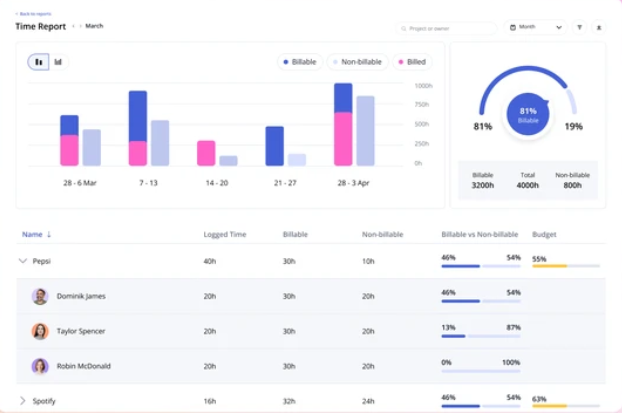
List, board, Gantt, and table views were available from the free plan, and time logging was built in from the start. Clients could be invited into their own projects to follow progress and leave comments, which cut down the status emails her account managers used to send every Friday.
The money features cost more. Client invoicing from logged time, time budgets, retainers, and workload planning start on the Accelerate plan at $24.99 per user per month, which needs at least 5 users. The entry Basics plan, at $9.99 per user, tracks time but doesn’t invoice, and it requires at least 3 users.
Pros:
- Time logging is built into every plan, including Free.
- List, board, Gantt, and table views are available on the free plan.
- Clients can join projects to follow progress and comment.
- The Accelerate plan adds invoicing from logged time, retainers, and workload planning.
Cons:
- Client invoicing requires the Accelerate plan at $24.99 per user per month, with a 5-user minimum.
- The Basics plan has a 3-user minimum.
Pricing: Free plan available. Paid plans start at $9.99/user/month (billed annually, 3-user minimum).
10. Zoho Projects – Best for Budget-Conscious Teams
Price is what pulled an accountant I know toward Zoho Projects when she set up project tracking for her small practice. At $4 per user per month, billed annually, the Premium plan cost a fraction of monday.com’s Pro plan, and it still covered her client deadlines and filing schedules.
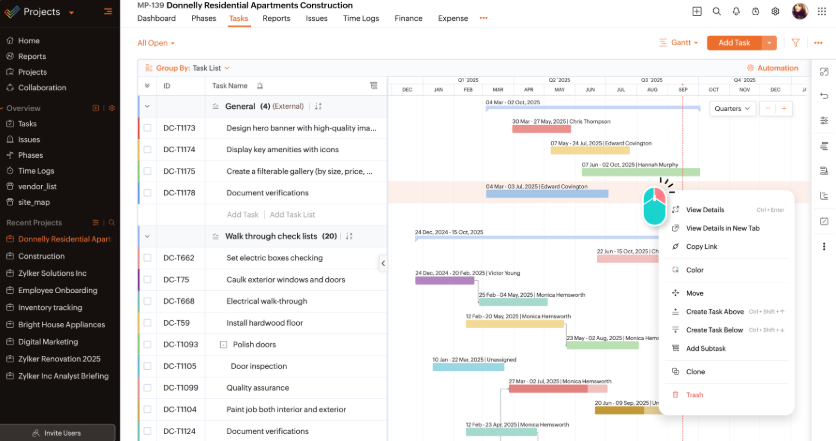
The feature list surprised her for the price. Premium included unlimited projects, Gantt charts, timesheets with billable and non-billable hours, recurring tasks, and project budgets. Because her practice already used Zoho for other work, the integration with Zoho Invoice turned approved timesheets into client invoices without retyping anything.
The free plan is tight for a growing team. It supports up to 5 users but only 3 projects, 5 GB of storage, and 50 workflow actions a month, and it doesn’t include time tracking. She also found the interface busier than simpler tools, so her team leaned on Zoho’s help guides during the first few weeks.
Pros:
- The Premium plan costs $4 per user per month, billed annually, and includes unlimited projects.
- Timesheets log billable and non-billable hours, with multi-level approvals on Premium.
- Gantt charts are available on every plan, including Free.
- The Zoho Invoice integration turns timesheets into client invoices on paid plans.
Cons:
- The free plan is limited to 3 projects and 50 workflow actions a month.
- Time tracking isn’t included on the free plan.
Pricing: Free plan available. Paid plans start at $4/user/month (billed annually).
11. Basecamp – Best for Flat-Rate Remote Collaboration
The owner of a remote branding studio I’ve worked with chose Basecamp because she was tired of paying per seat. Her team of designers and freelancers changed size every month, and with monday.com, every new contractor meant another seat on the bill.
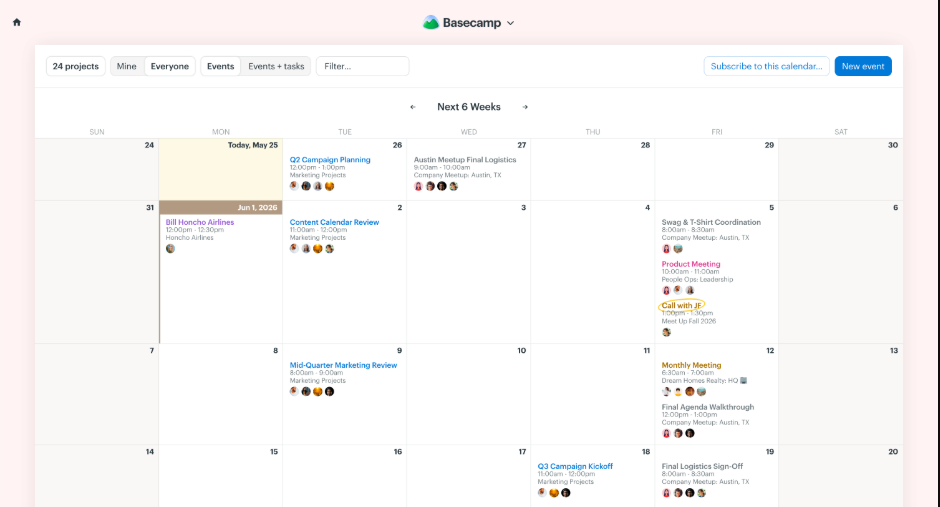
Basecamp doesn’t charge per user on any plan. Pricing depends on how many active projects and people you need, starting at $29 per month for 3 projects and up to 5 users, while Pro, at $79 per month, covers 8 projects and 10 users. From Pro up, each project can combine a message board, to-dos, a schedule, docs and files, and group chat, so her team stopped losing decisions in email threads.
The caps are the catch. Every plan below Pro Unlimited limits both active projects and users, so a studio juggling many clients or contractors has to move up a tier. Time tracking starts on Pro Plus at $99 per month, and Pro Unlimited costs $199 per month billed annually, or $329 monthly. Basecamp also has no Gantt charts, so detailed scheduling needs another tool. Here are some Basecamp alternatives for teams that need more planning depth.
Pros:
- Flat pricing with no per-user fees on any plan.
- Unlimited users and projects on Pro Unlimited.
- Message boards, chat, and automatic check-ins keep remote teams aligned without meetings.
- Clients can be invited into projects to follow progress.
Cons:
- Every plan below Pro Unlimited caps both active projects and users, from 3 projects and 5 users on Freelancer up to 12 projects and 15 users on Pro Plus.
- Time tracking requires the Pro Plus plan at $99 per month or higher.
Pricing: Free plan available (1 project, up to 3 users). Paid plans start at $29/month flat for up to 5 users.
12. Jira – Best for Software Development Teams
An engineering lead I know moved her developers off monday.com because the boards couldn’t model how software actually ships. In Jira, each bug and feature became an issue that moved through a backlog, into a sprint, and onto a release, with Scrum and Kanban boards built in.
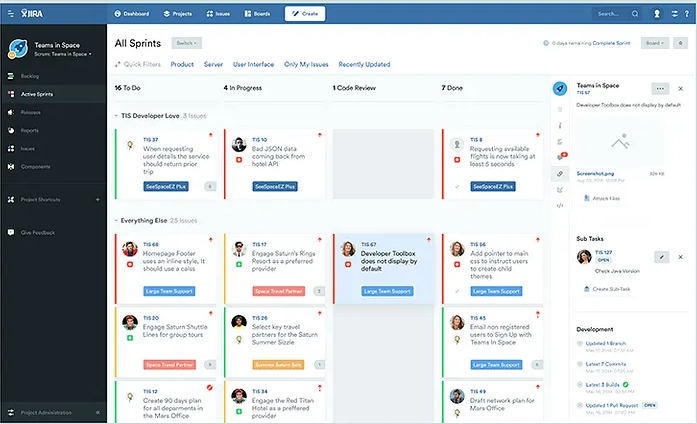
For engineering, the depth paid off. Backlogs, sprint planning, and roadmaps were part of the free plan, and connecting the code repository meant commits and pull requests showed up on the issues they fixed. The free plan supports up to 10 users, which was enough for her team to run its first few sprints before paying.
Outside engineering, it’s a harder fit. Her marketing and support colleagues found Jira’s issue types and workflows too technical and preferred lighter Jira alternatives. Automation is also limited at the lower tiers, with 100 rule runs a month on Free and 1,700 on Standard.
Pros:
- Scrum and Kanban boards, backlogs, and sprints are built in.
- The free plan supports up to 10 users with core agile features.
- Repository integrations link commits and pull requests to the issues they fix.
- Standard plan pricing starts at $7.91 per user per month.
Cons:
- Automation is limited to 100 rule runs a month on Free and 1,700 on Standard.
- Non-technical teams often find its workflows and issue types too complex.
Pricing: Free for up to 10 users. Paid plans start at $7.91/user/month.
How Did I Evaluate These monday.com Alternatives?
Switching tools is costly when the pick doesn’t stick. A study by Capterra in 2025 found that only 34% of software buyers successfully adopt the tool they buy, so I judged each alternative on six factors that predict whether a team will actually keep using it:
- User Reviews and Ratings: I checked every tool’s rating on G2 in October, using each product’s own listing. I also read recent reviews for complaints that came up again and again, and those patterns shaped each tool’s cons.
- Essential Features and Functionality: I looked at how well each tool covers the core work monday.com handles: task management, multiple views, automations, and collaboration. I also checked the gaps teams often leave over, such as time tracking and resource planning. Looking at the best PM software compared also helps put these alternatives in context against the broader market.
- Ease of Use: I considered how quickly a new teammate, including the least technical person on the team, could find and update their tasks without training.
- Customer Support: I compared the support channels on each plan and whether live help is reserved for higher tiers.
- Value for Money: I checked prices against vendor pricing pages and recent independent breakdowns, then confirmed billing terms, seat minimums, and which features sit on which plan. Plan gating is one of the main reasons teams leave monday.com, so it weighed heavily here.
- Personal Experience: I used three of these tools myself: ProProfs Project, ClickUp, and Trello. For the rest, I relied on colleagues, friends, and fellow project managers who ran real projects in them.
Know Who’s Working on What Without Chasing Updates
What Are My Top 3 monday.com Alternatives?
The right pick depends on why you’re leaving monday.com, so these three cover different reasons:
1. ProProfs Project
Choose ProProfs Project if your team does client work and you’re tired of paying extra to track hours. Time tracking and invoicing are included on every plan, and the Business plan is a flat price for unlimited users, so the bill stays the same as you add freelancers or new hires. Start on the free plan with one real client project to see whether it fits before moving everyone over.
2. ClickUp
Choose ClickUp if you like monday.com’s flexibility but want more features for less per seat. The $7 Unlimited plan covers most of what teams upgrade to monday.com’s Pro plan for. Be ready for a learning curve, though, and budget extra if you want the Brain AI features.
3. Trello
Choose Trello if your team only ever used monday.com’s board view and wants the fastest possible setup. The free plan and built-in automation get a small team up and running in minutes. You’ll need Premium once you want timeline or calendar views.
Switch to a Tool That Grows With Your Team, Not Your Seat Count
monday.com works well for many teams, but seat minimums, plan gating, and growing board upkeep push plenty of others to look elsewhere. The good news is that most of the monday.com alternatives here fix at least one of those problems without forcing you to give up the visual way of working your team already knows.
Before you switch, list the monday.com features your team actually used last month and the one gap that keeps bothering you. Then pick one tool from this list, move a single real project into it, and give it a week. How your team handles that week will tell you more than any comparison table.
If your team bills clients for its time, I’d start with ProProfs Project. It’s what my team uses to keep tasks, hours, and invoices in one place, and the free plan is enough to test it on one project. If it doesn’t fit how your team works, you’ll know within that first week, and you’ll have lost nothing.
Frequently Asked Questions
What should I look for in a monday.com alternative?
Start with the reason you’re leaving. If cost is the issue, compare the total price for your real team size, including any seat minimums. If features are the issue, check which plan includes time tracking, dependencies, and automations. Finally, make sure the least technical person on your team can find and update their tasks without training.
Is there a free version of monday.com?
Yes. monday.com offers a free plan for up to 2 seats with up to 3 boards and 3 docs, which works for trying the tool or managing a personal list. Paid plans start at $9 per seat per month, billed annually, and every paid plan requires at least 3 seats, so even a two-person team pays for three.
Why is monday.com so expensive for small teams?
monday.com charges per seat, and every paid plan needs at least 3 seats. Many everyday features also sit on higher tiers. Gantt and calendar views start on Standard, while time tracking and task dependencies need Pro at $19 per seat per month, billed annually. Small teams often pay for seats and plans they wouldn’t otherwise choose.
Does monday.com have time tracking?
Yes, but only on the Pro and Enterprise plans. Teams on Basic or Standard can’t log time natively, so they either upgrade or add a separate time tracker. If billable hours matter to your work, check which plan includes time tracking before you commit, since it can change your real cost per seat significantly.
Is monday.com good for small businesses?
It can be, especially for teams that want colorful, flexible boards and are happy to pay for at least 3 seats. Small businesses tend to struggle once they need time tracking, dependencies, or more automations, since those sit on pricier plans. Very small teams of one or two people often find the seat minimum hard to justify.
How do I move my projects off monday.com?
Start by exporting your boards to Excel, then clean up columns you no longer use before importing them into the new tool. ProProfs Project, for example, supports project imports. Move one active project first and run it there for a week. Once your team is comfortable, migrate the rest, and keep your monday.com account active until everything has moved.
When is it time to switch from monday.com?
It’s time to look elsewhere when you’re paying for seats nobody uses, upgrading plans just to unlock one feature, or spending more time maintaining boards than doing the work. Another sign is when teammates stop updating their tasks because the setup feels too complex. Any of these usually means a better-fitting tool exists.
Can ProProfs Project replace monday.com for client work?
Yes, for teams that manage client projects. ProProfs Project includes List, Gantt, Kanban, and Calendar views, guest access for clients, and time tracking with invoicing on every plan. The free plan covers 3 users and 50 open tasks, and the Business plan charges a flat price for unlimited users, so costs don’t rise with each hire.
FREE. All Features. FOREVER!
Try our Forever FREE account with all premium features!